









Long before modern laboratories began analyzing hive compounds, bees were already practicing chemistry.
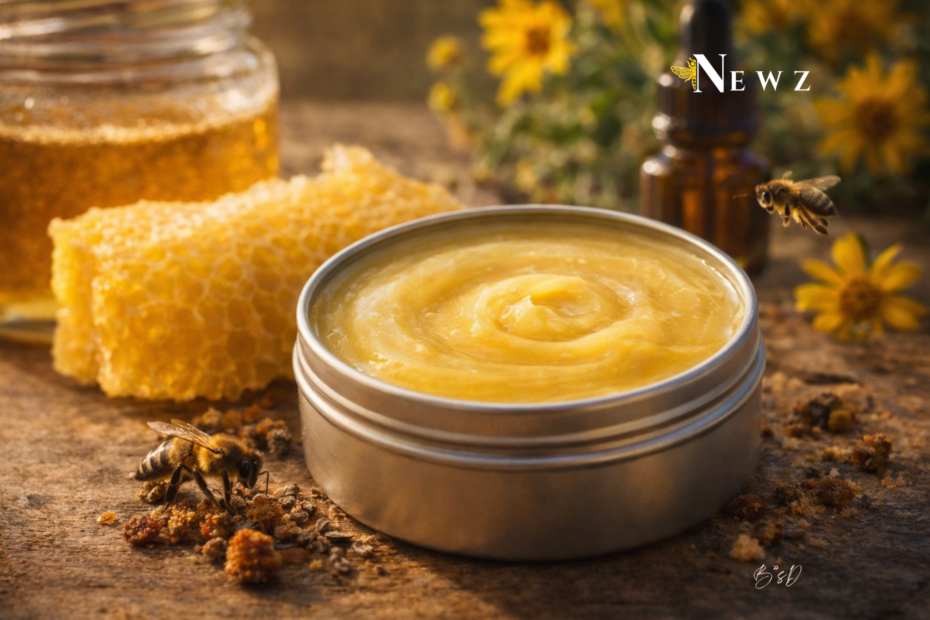
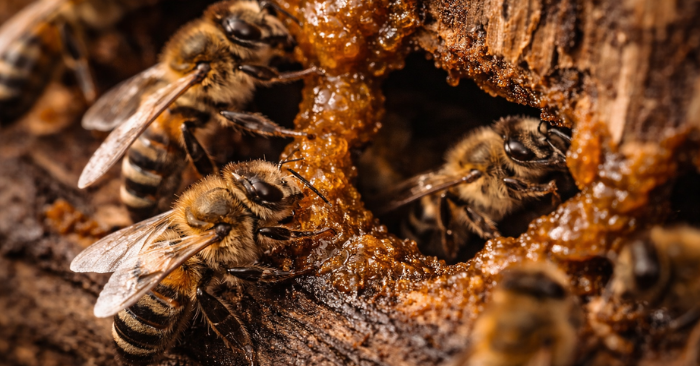
Inside the hive, propolis functions as a structural sealant and microbial shield. Bees collect resin from tree buds and plant sources, mix it with enzymes and wax, and use it to line hive walls, seal cracks, and protect the colony from bacteria and fungi. This resinous substance is sometimes referred to as “bee glue,” but its role is far more sophisticated: it helps maintain the sterile interior environment essential to colony survival.
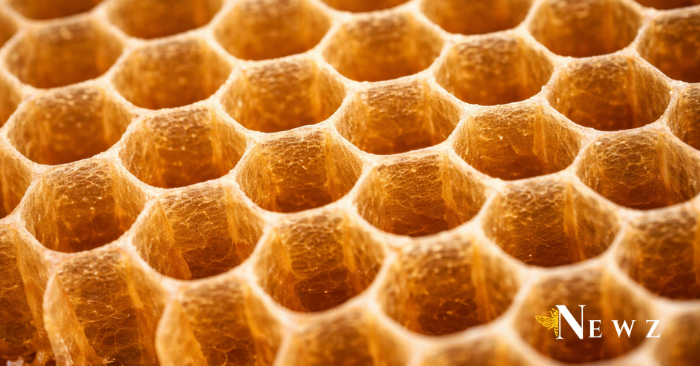
Beeswax, by contrast, is a structural material. Secreted by worker bees, it forms the hexagonal architecture of the honeycomb — a breathable yet protective matrix that stores honey, pollen, and developing brood.
When combined in topical preparations, these two hive materials create a balm that mirrors the hive’s own protective design: barrier + antimicrobial support.
What the Research Suggests
Modern studies have examined propolis for its:
- Antioxidant compounds
- Flavonoid content
- Antimicrobial activity
- Potential anti-inflammatory properties
Beeswax, while less chemically active, plays a critical role in skin barrier support. It forms a semi-occlusive layer that helps reduce transepidermal water loss — meaning it slows moisture evaporation while still allowing airflow.
Olive oil, often included in traditional salve preparations, contributes fatty acids that soften and condition the skin.
Together, these ingredients do not “heal” in a pharmaceutical sense — but they may support the skin’s natural protective and restorative processes.
A Traditional Approach to Skin Protection
Historically, beeswax and propolis have been used in folk medicine for:
- Protecting dry or cracked skin
- Shielding minor abrasions from environmental exposure
- Preserving wounds from contamination
- Softening rough or weathered hands
Ancient civilizations recognized the value of these hive substances long before modern chemistry explained their properties. The Egyptians used beeswax in ointments and embalming rituals, appreciating its preservative and protective qualities. Greek physicians, including Hippocrates, reportedly applied propolis preparations to soothe wounds and support healing. In Roman times, propolis was carried into battle as a natural dressing for injuries, valued for its protective and antimicrobial characteristics.
Across cultures, from the Mediterranean to parts of Eastern Europe and Asia, propolis was considered “the defender of the hive”—and by extension, a defender of the human body. While traditional uses were based on observation rather than laboratory science, they reflected a deep understanding of nature’s patterns: what protects the colony may also help protect the skin.
Today, research continues to explore these ancient practices through modern scientific methods, bridging traditional wisdom with contemporary inquiry.
In modern natural skincare, these salves are often used as protective balms rather than corrective treatments.
It is important to understand the distinction:
They are supportive, not curative.
The Bigger Ecological Picture
Interest in hive-based skincare reflects something deeper: a renewed respect for pollinators and the complex systems they sustain. A beeswax and propolis salve works best as a protective finishing layer rather than a replacement for a full skincare routine.
🌤 Morning Use
In the morning, apply a thin layer to clean, dry skin—especially on areas exposed to wind, sun, or friction. Because beeswax forms a breathable barrier, it can help shield the skin from environmental stressors throughout the day. Allow the salve a few minutes to absorb before layering sunscreen or makeup, if used.
This approach is particularly helpful during colder months when skin tends to lose moisture more quickly.
🌙 Evening Use
In the evening, after cleansing, apply a slightly thicker layer to areas experiencing dryness, irritation, or rough texture. Nighttime allows the balm to remain undisturbed, supporting the skin’s natural overnight renewal process.
The semi-occlusive nature of beeswax helps reduce moisture loss while propolis contributes antioxidant and antimicrobial compounds that may support a balanced skin environment.
Patch Testing
Because propolis is derived from plant resins and bee enzymes, those with sensitivities to bee products or highly reactive skin should perform a patch test before broader application.
Persistent or medically significant skin conditions should always be evaluated by a qualified healthcare professional.
Every jar of beeswax or propolis represents:
- Floral diversity
- Resin-producing trees
- Healthy forage environments
- Stable bee colonies
When used thoughtfully, these ingredients remind us that the hive is not just a source of honey — but a living biochemical ecosystem.
A Balanced Perspective
Research into apitherapy and hive compounds continues to evolve. While laboratory findings are promising in some areas, conclusions vary depending on formulation, concentration, and context of use.
BeeNewz encourages readers to approach natural products with curiosity and discernment — appreciating both traditional wisdom and emerging scientific insight. For readers interested in incorporating hive-based balms into their routine, ingredient quality matters. Look for formulations made with minimally processed beeswax, properly sourced propolis extract, and organic carrier oils without synthetic fragrance or unnecessary fillers. Responsible sourcing supports both skin integrity and sustainable beekeeping practices.
Nature offers remarkable materials.
Understanding them is the first step toward using them wisely.
Discover more from Bee Newz
Subscribe to get the latest posts sent to your email.

Hello there, You’ve done a great job. I will certainly digg it and personally recommend to my friends. I’m sure they will be benefited from this site. http://www.ifashionstyles.com